
Table of Contents
- Why the Right Scholarship Search Engines Change Everything
- 1. Fastweb: Best for Trade School and College Scholarships
- 2. Scholarships.com: Best for a Continuously Updated Database
- 3. Federal Student Aid Scholarship Search: Best Free Government Resource
- 4. BigFuture Scholarship Search: Best for Large Program Volume
- 5. Scholarships360: Best for Financial Aid Advice Alongside Listings
- 6. Bold.org and ScholarshipOwl: Best for Platform Variety
- 7. How to Find Scholarships for College with a Scholarship Tracker
- Quick Comparison: The 7 Best Websites to Find College Scholarships
- Frequently Asked Questions
Last Updated: October 14, 2026

Why the Right Scholarship Search Engines Change Everything
The right scholarship search engines turn an overwhelming process into a manageable weekly habit. Instead of guessing where money exists, families can filter listings by major, background, and deadline, then apply to the awards their student actually qualifies for.
The fix is not more searching; it is better searching. Below, we rank the 7 best websites to find college scholarships in 2026, with the trade-offs most roundups skip.
1. Fastweb: Best for Trade School and College Scholarships
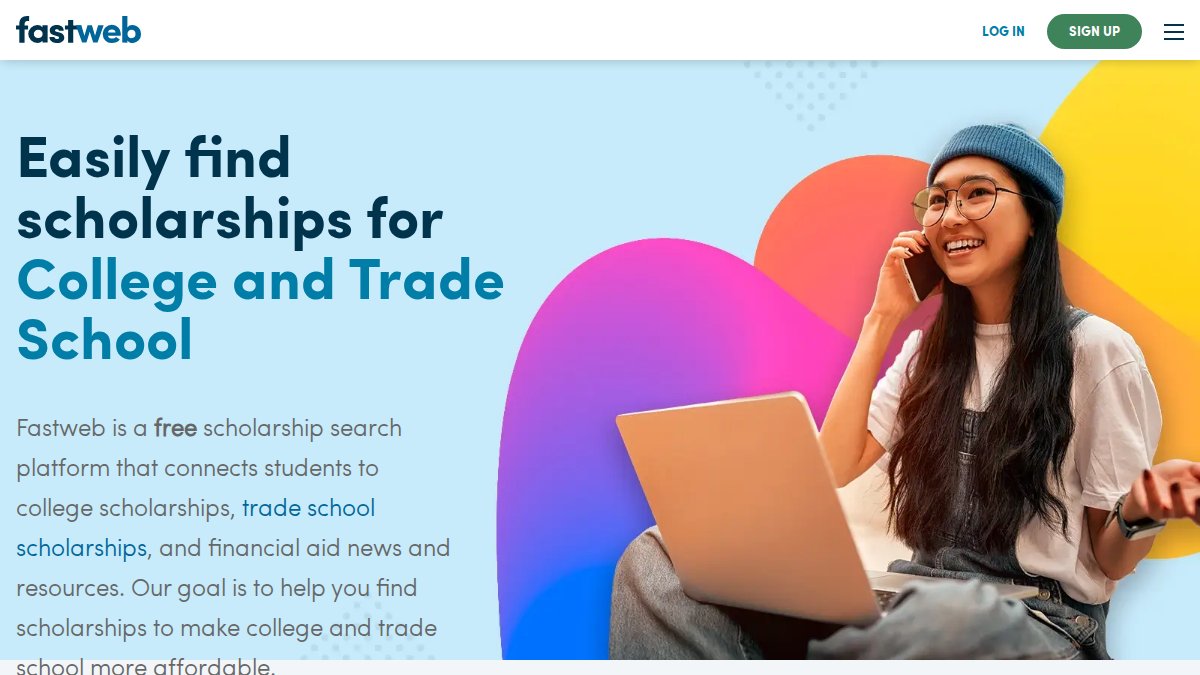
Fastweb is a free scholarship search platform that covers both four-year college and trade school awards. That range matters because many databases quietly ignore vocational programs.
Students build a profile, then browse matched listings alongside financial aid news. The one gap: the supplied results do not specify application-tracking tools, so pair it with a separate tracker.
2. Scholarships.com: Best for a Continuously Updated Database
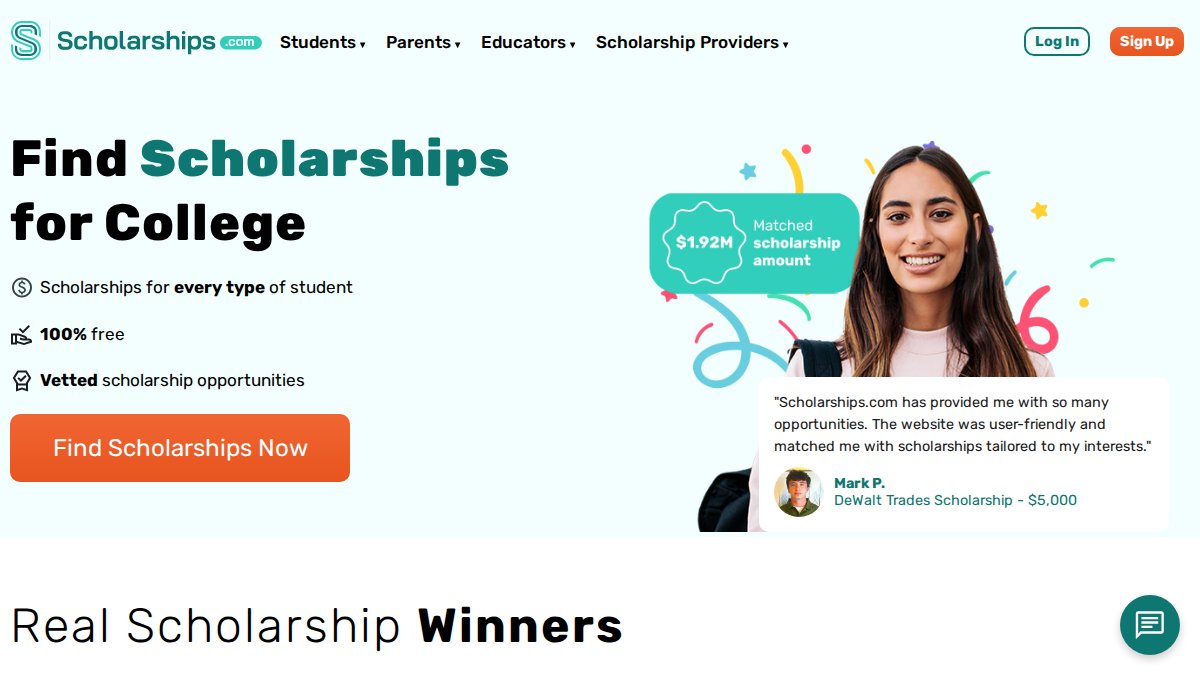
Scholarships.com centers on a scholarship database described as verified and continuously updated. Freshness is the whole point: expired listings waste the most time in any search.
What the supplied results do not explain is the verification process itself, so treat every listing as needing a quick check before your student invests hours in an essay.
3. Federal Student Aid Scholarship Search: Best Free Government Resource
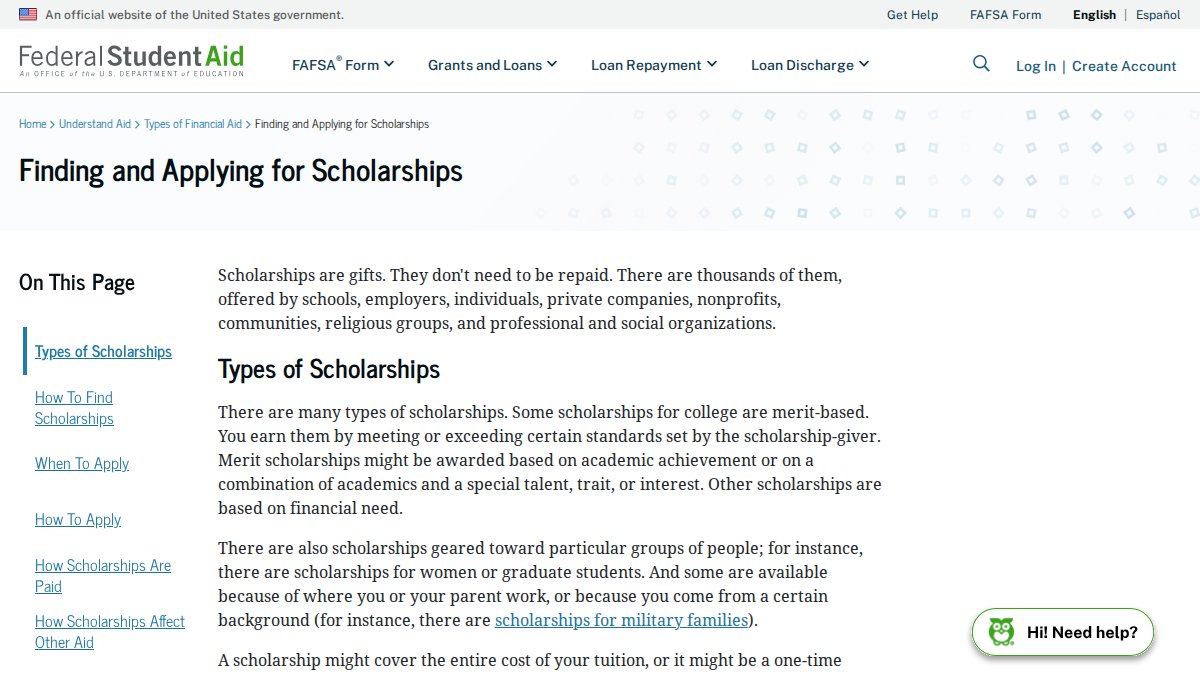
Federal Student Aid offers free scholarship-search guidance through its official site, covering college and career school. It also states plainly that scholarships do not have to be repaid, a useful reminder when comparing aid types.
The trade-off is depth. The supplied results do not describe database size or matching features, so use it as a trustworthy starting point rather than a primary search tool.
4. BigFuture Scholarship Search: Best for Large Program Volume
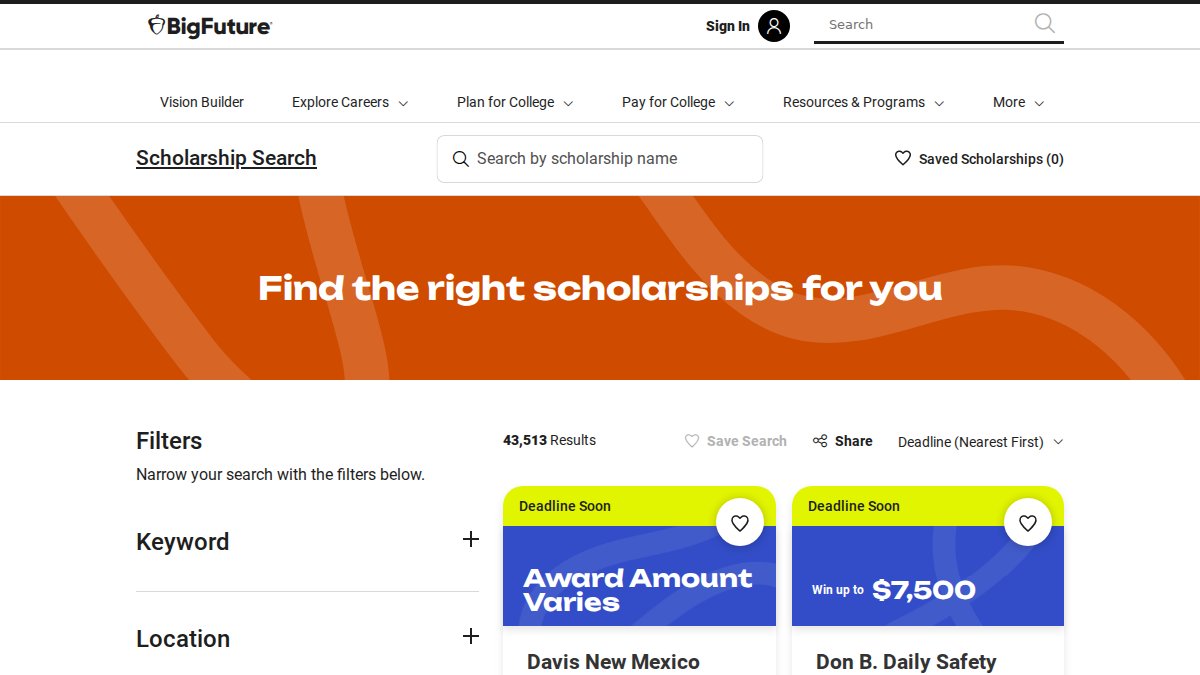
BigFuture, built by College Board, matches students with scholarship programs at real scale. Its search result reports more than 24,000 programs and more than $1.5 billion in scholarship dollars yearly (Scholarship Directory - BigFuture).
That volume cuts both ways. With thousands of listings, filters do the heavy lifting, so students should narrow by major, eligibility, and deadline before browsing.
5. Scholarships360: Best for Financial Aid Advice Alongside Listings
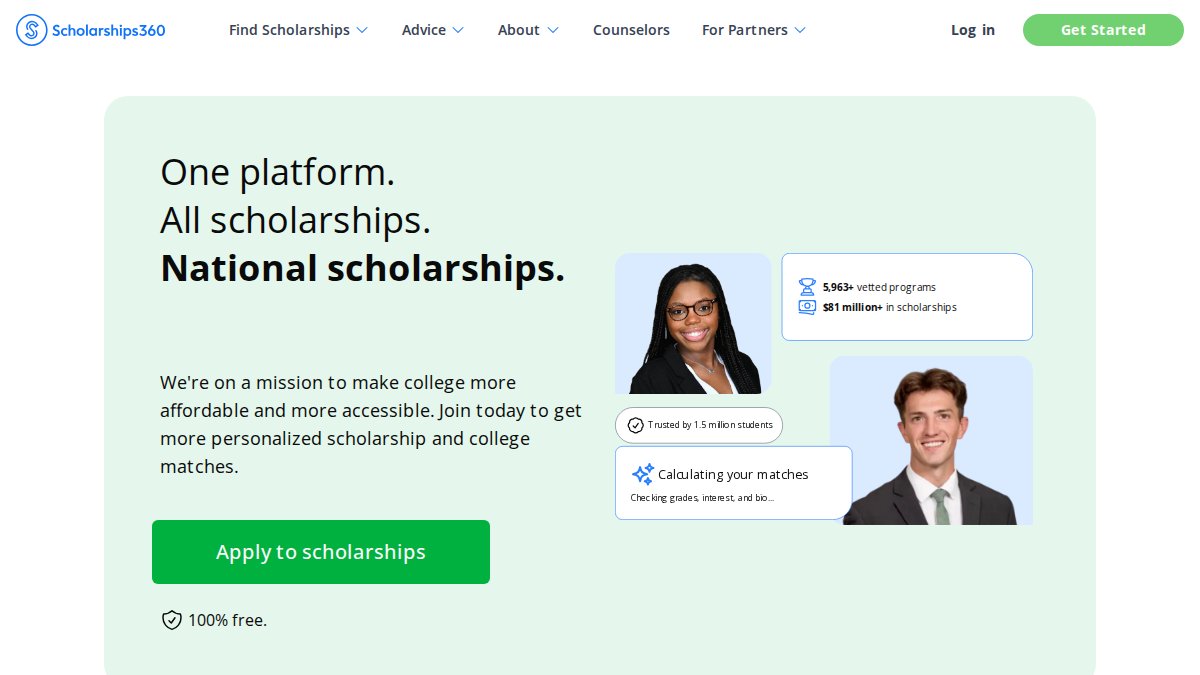
Scholarships360 pairs scholarship opportunities with financial aid advice, which suits families who need context, not just links. Understanding how aid packages fit together often changes which awards are worth pursuing.
The supplied results do not detail its search tools or database size, so we would use it as a companion resource rather than a sole search engine.
6. Bold.org and ScholarshipOwl: Best for Platform Variety
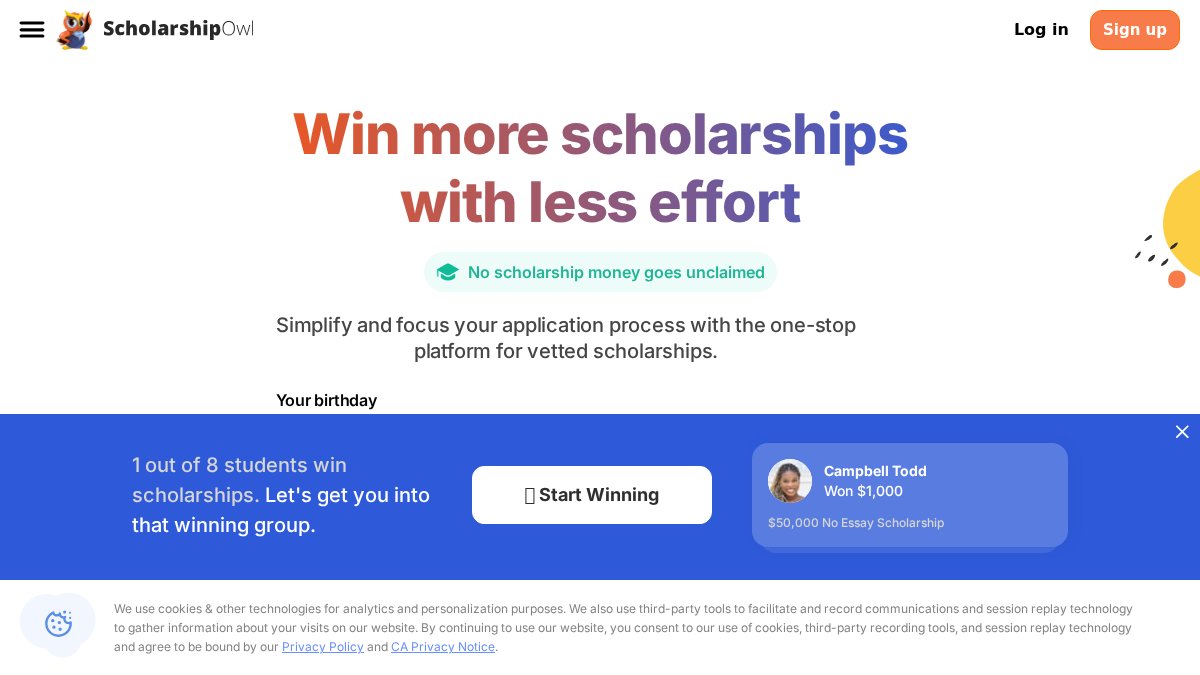
Bold.org and ScholarshipOwl both appear in supplied comparisons of scholarship websites, and both are worth a profile for one reason: variety. Different platforms surface different sponsors, and awards missed on one site often appear on another.
What the supplied results do not verify is specific features, pricing, or database details for either platform. Create profiles on both, then judge them by the matches your student actually receives.
7. How to Find Scholarships for College with a Scholarship Tracker
Learning how to find scholarships for college comes down to one habit: tracking. A tracker converts scattered listings into a weekly routine, and it is the single change that separates families who apply to two awards from families who apply to eleven.
Setting Up Your Scholarship Tracker
Build a simple spreadsheet with these columns, then update it every Sunday:
- Award name and sponsoring organization
- Award amount and number of awards available
- Eligibility requirements (GPA, major, residency, membership)
- Application materials needed (essay, recommendations, transcript)
- Application deadline and renewal terms
- Status: researching, drafting, submitted, decision pending
Verifying Listings and Avoiding Scams
A legitimate scholarship never charges an application fee and never asks for a Social Security number or bank details upfront. If a listing demands payment to "hold" an award, close the tab.
Quick Comparison: The 7 Best Websites to Find College Scholarships
Most roundups list sites and stop. The gap none of them close is a consistent, side-by-side view of how each platform actually works: what filters it exposes, how matching happens, whether an account is required, and how broad the listing coverage is. The table below does that, followed by the mechanics behind each column.
| Website | Best For | Cost | Account Required? | Matching Method | Notable Filters | Listing Coverage | Standout Detail |
|---|---|---|---|---|---|---|---|
| Fastweb | Trade and college awards | Free | Yes, profile required | Profile-based match alerts | Major, background, year in school | Four-year and trade/vocational programs | Explicitly covers trade school awards |
| Scholarships.com | Fresh, verified listings | Free to students | Yes, profile required | Profile-based search plus browse | Major, GPA, residency, deadline | Broad national database | Database described as verified and continuously updated |
| Federal Student Aid | Trusted starting point | Free | No | Browse-only guidance | None (informational) | Guidance pages, not a searchable database | Official source on how scholarships differ from loans |
| BigFuture | Program volume | Free | Yes, College Board account | Profile-based match | Major, eligibility, deadline | Reports 24,000+ programs and $1.5B+ in awards yearly | Largest stated program count of the group |
| Scholarships360 | Aid advice plus listings | Free | Optional for browsing | Curated listings plus editorial guidance | Topic, student type, deadline | Curated rather than exhaustive | Financial aid context alongside awards |
| Bold.org | Sponsor variety | Free to students | Yes, profile required | Profile-based match plus direct applications | Identity, major, background, deadline | Sponsor-hosted exclusive awards | Different sponsor pool than legacy databases |
| ScholarshipOwl | Sponsor variety | Free tier with optional paid upgrades | Yes, profile required | Profile-based match plus auto-apply features | Major, background, deadline | Aggregated sponsor listings | Overlaps Bold.org on variety, not on sponsors |
How to Read the Comparison Columns
Account required. Every profile-based platform trades your student's data for matched listings. That is the deal: the more detail a profile contains, the tighter the matches, but the more personal information sits in a third-party database. Federal Student Aid is the only entry here that does not require an account, because it is guidance rather than a searchable database.
Matching method. Two patterns dominate. Profile-based matching pushes listings to the student after the profile is built, which is efficient but can bury awards the algorithm does not surface. Browse-and-filter search lets the student drive, which is slower but catches edge-case eligibility. The strongest routine uses both: build the profile on one platform, then browse a second platform with different sponsor coverage.
Listing coverage. Coverage is not the same as volume. BigFuture advertises the largest program count, but a large count includes awards with narrow eligibility that most students will never qualify for. Bold.org and ScholarshipOwl surface sponsor pools that legacy databases often miss, which is why running two platforms beats running one.
Cost. All seven are free to students at the search stage. ScholarshipOwl is the only entry with an optional paid tier, and any paid upgrade should be judged against the matches the free tier already produces.
No single platform wins on every column. The practical move is one profile-based database for matched alerts, one browse-and-filter database for edge-case awards, and Federal Student Aid as the neutral reference point for how aid types interact.
A Repeatable Weekly Workflow Across Platforms
A comparison table only pays off if it feeds a routine. Most families who apply to double-digit awards follow the same pattern:
- Sunday, 30 minutes. Log into the profile-based platform, review new matches, and add anything eligible to the tracker.
- Sunday, 15 minutes. Browse the second platform by major and deadline, since sponsor pools differ.
- Midweek, 20 minutes. Draft or revise one essay against the closest prompt already in the tracker.
- Friday, 10 minutes. Confirm deadlines on anything marked "submitted" and follow up on recommendations.
That cadence is what turns a comparison table into applications submitted, rather than tabs left open.
Frequently Asked Questions
Are scholarship search websites free to use?
Most major scholarship search websites, including Fastweb and the Federal Student Aid Scholarship Search, are free. You create a student profile, and the platform matches you with scholarships. Some sites may offer paid upgrades for tracking or essay review, but the core search function rarely costs money. If a site asks for a credit card before showing you listings, treat that as a red flag and move on to a verified free resource.
How do I know if a scholarship website is legitimate?
Check whether the site has a privacy policy, a physical address, and a clear explanation of how it uses your data. Legitimate scholarship search engines never charge an application fee or guarantee you a win. Cross-reference listings with the scholarship provider's own website. The Federal Student Aid office warns that you should never pay to apply for a scholarship. If a site pressures you to act immediately or asks for your Social Security number upfront, skip it.
When should students start looking for college scholarships?
Start the summer before junior year of high school. That gives you time to build a student profile, gather application materials, and meet early deadlines. Many merit-based scholarships open applications 12 to 18 months before the award is disbursed. Younger students can still create accounts on free scholarship search websites to browse listings and understand eligibility requirements. Starting early also lets you reuse essays and recommendations across multiple applications.
What GPA will get you a full-ride scholarship?
There is no single GPA that guarantees a full-ride scholarship. Most full-ride awards through national scholarships require a 3.5 GPA or higher on a 4.0 scale, plus strong extracurricular activities, community involvement, and essays. Some local scholarships and need-based awards weigh financial need and personal circumstances more heavily than GPA. Use a scholarship tracker to filter by your actual GPA and focus on awards where you meet the eligibility requirements.